Derek Martin
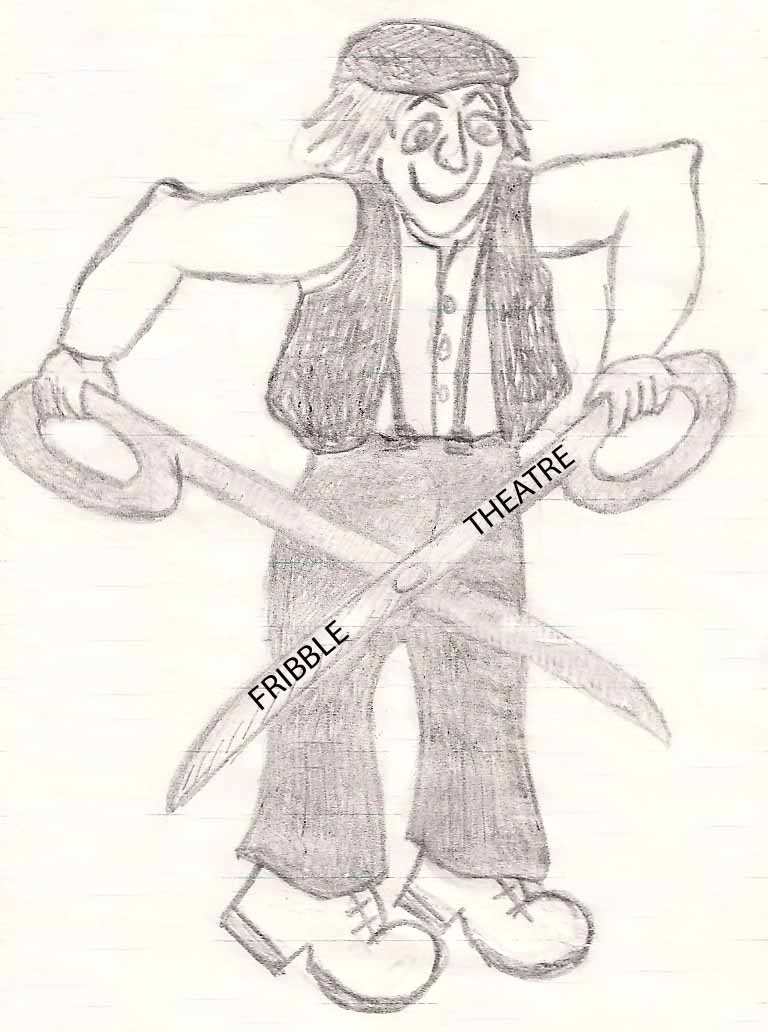
When Derek directs or produces a show independently, he trades under the name of Fribble Theatre.
So far, this has included :
GOALS - a Theatre-in-Education (TiE) play commissioned by University of Wales Newport which toured schools around South Wales in 2005. It was recommissioned and revived in 2006. The play, which was performed to Year 9 pupils, dealt with making choices about GCSE subjects, and explored work and Higher Education options. Throughout the show, the audience discussed the characters options and decided (by vote) on what choices they should make. Derek wrote and directed this play.
GOALS II - a development of GOALS. It introduced another character, thereby allowing for more issues to be explored. It was translated into Welsh and a bilingual cast rehearsed and performed both the English and Welsh versions. The show toured schools in South Wales. Derek wrote and directed three separate tours of this play in 2007, 2008, and 2009.
OFF THE STREETS - a revival of the earlier TiE play, directed by Derek and performed by students of Preston College/UCLan in 2012.
LACRIMA - a revival of a much earlier play, a short monologue for a woman performed by Alexandra Webb in the summer of 2015.
Why FRIBBLE?
Fribble is an old English word with several meanings. In the theatre, it is a verb with a very specific meaning: to ad lib on stage to cover up for the fact that you have forgotten your lines.
In The Antipodes (1640) by Richard Brome, Lord Letoy speaks of his own theatre company and one actor in particular:
LETOY:
Well, sir, my actors
Are all in readiness and, I think, all perfect
But one that never will be perfect in a thing
He studies. Yet he makes such shifts extempore
(Knowing the purpose what he is to speak to)
That he moves mirth in me ´bove all the rest.
For I am none of those poetic furies,
That threats the actor’s life in a whole play,
That adds a syllable or takes away.
If he can fribble through and move delight
In others, I am pleased.
(Act 2, Scene 1)
Fribble Theatre was established as predominantly a new writing company but the name reminds us that it is down to the actors to communicate ideas and concepts. Regardless of the play, the director, the design... what ever the actors do or say in performance that becomes the play.
As a writer/director, Derek is particularly interested in new theatre work and reinventing the classics for contemporary audiences. However he recognises that the most important part of the theatre process is the performers – it is their skills, talents and imagination that ultimately make a play work in performance.